Mapping Decision Pathways Through Cumulative Reward Stacking Rules in Regulated Online Gaming Sites
Kai Hughes · Sep 24, 2026
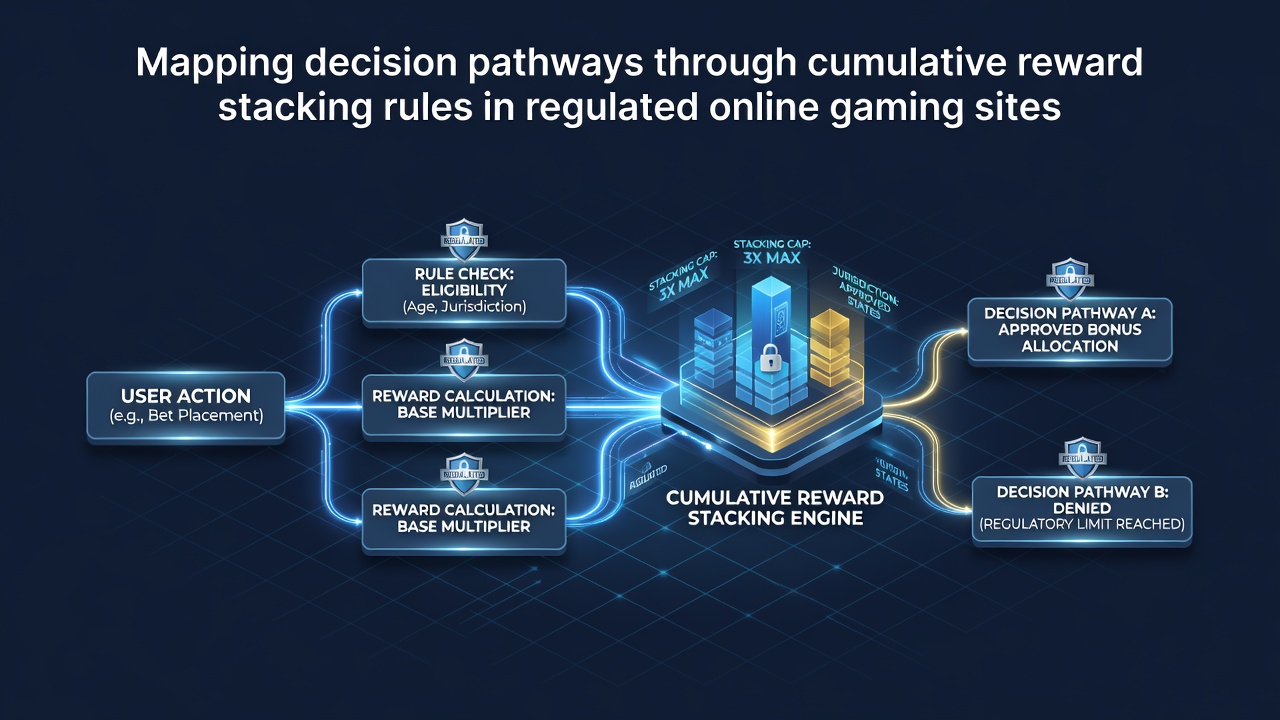
Mapping Decision Pathways Through Cumulative Reward Stacking Rules in Regulated Online Gaming Sites
Regulated online gaming platforms organize reward structures around cumulative stacking rules that determine how players combine bonuses, free spins, and loyalty credits across multiple promotion layers, and these frameworks shape the sequences players follow when they activate or defer offers. Operators in jurisdictions such as those overseen by the Malta Gaming Authority and the Nevada Gaming Control Board publish clear stacking parameters that limit simultaneous claims and set wagering multipliers, which in turn create branching decision points for users who want to maximize returns without violating terms.
Understanding Layered Reward Mechanics
Each promotion cycle begins with an initial deposit match or spin credit that carries its own playthrough requirement, and subsequent offers attach additional conditions that either merge with or override prior multipliers depending on the site's published stacking policy. Data from industry reports show that sites typically allow up to three active bonus layers before new credits enter a queue, while certain loyalty programs convert points into stackable cashback that resets only after all prior requirements clear. Researchers who examined transaction logs across multiple European platforms noted that players who track expiration dates alongside stacking limits reach higher completion rates because they avoid accidental forfeiture when a new offer activates automatically.
Decision Trees Formed by Stacking Constraints
Players encounter sequential choices once they enter a promotion cycle, starting with whether to claim an immediate match bonus or to wait for a higher-tier offer that may stack on top of existing credits. The pathways branch further when operators introduce time-limited multipliers that apply only to specific game categories, forcing decisions about which titles to play first to satisfy combined wagering thresholds. One study released by the University of Nevada in 2025 tracked over 12,000 player accounts and found that participants who mapped these branches in advance completed an average of 1.8 more bonus layers per month than those who responded to offers in real time without prior planning.
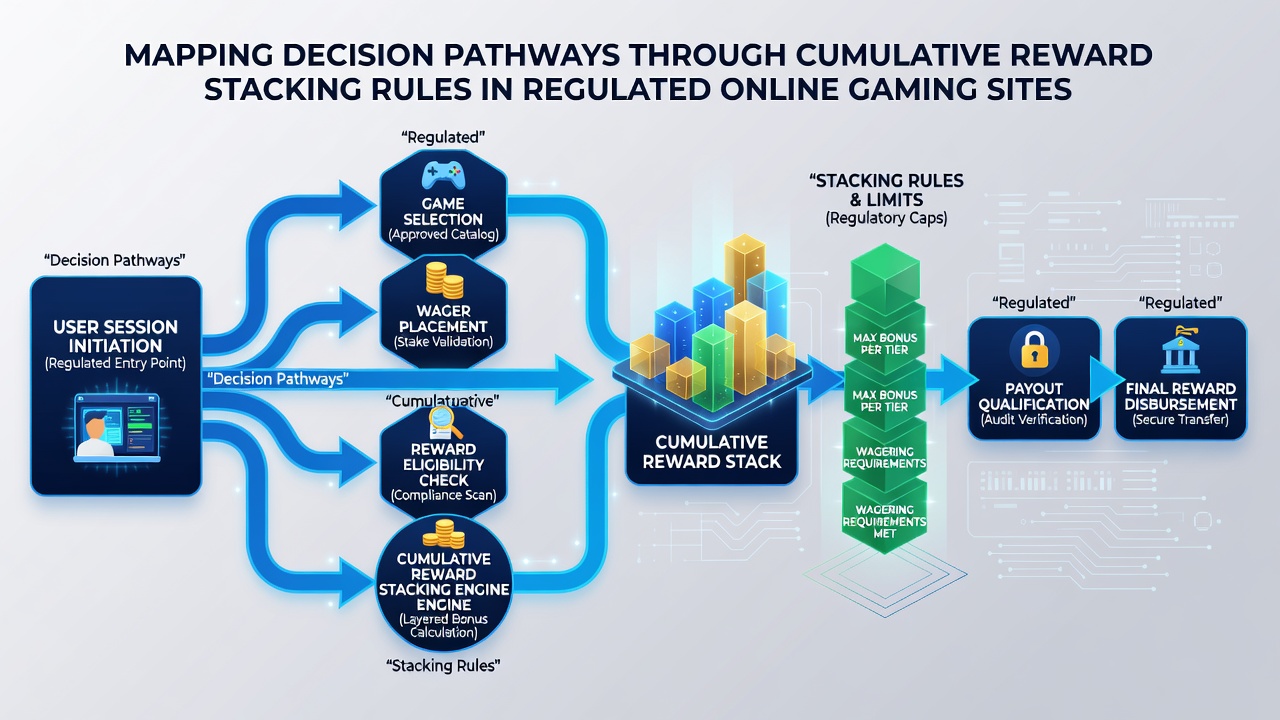
September 2026 marks the scheduled rollout of updated transparency standards in several North American and Australian markets, where regulators will require operators to display stacking eligibility in a single dashboard view so players can see active layers and projected requirements without navigating separate terms pages. These changes aim to reduce disputes over auto-applied credits that previously bypassed manual stacking selections, and early compliance testing indicates shorter resolution times for player queries once the dashboards launch.
Regulatory Variations Across Markets
Rules differ by region because each licensing body sets its own limits on bonus aggregation. Sites licensed in Ontario follow the Alcohol and Gaming Commission of Ontario guidelines that cap total bonus value per player at CAD 1,000 across all active promotions, whereas platforms regulated by the Australian Communications and Media Authority allow unlimited stacking provided each layer carries a distinct game restriction tag. European operators must also comply with consumer protection directives that mandate clear disclosure of any cap on cumulative rewards before a player deposits, which has led to standardized information boxes that appear at the point of offer selection.
Those who monitor regulatory filings observe that enforcement actions increasingly focus on whether operators correctly flag incompatible stacking combinations rather than on the size of the rewards themselves. Figures released by the Malta Gaming Authority for the first half of 2025 showed a 23 percent drop in bonus-related complaints after several major sites introduced mandatory pathway previews that list every possible stacking outcome before activation.
Practical Mapping Tools and Player Resources
Third-party comparison services and operator-hosted calculators now provide interactive diagrams that let users simulate different claim orders and see projected wagering totals. These tools incorporate real-time data feeds from the gaming platforms so the displayed pathways update when new promotions launch or when existing offers near expiration. Academic reviews of such tools indicate that users who consult them before committing funds spend 14 percent less time resolving account queries, because the simulations flag conflicts between loyalty tiers and time-sensitive spin credits in advance.
Operators have begun embedding similar mapping interfaces directly into account dashboards, and preliminary data from a pilot program running through mid-2026 shows reduced support ticket volume once players can visualize stacking sequences without leaving the site. The approach aligns with broader industry moves toward self-service transparency that several regulators have encouraged through updated licensing conditions.
Conclusion
Cumulative reward stacking rules in regulated online gaming sites generate complex decision pathways that players navigate by consulting published limits, expiration schedules, and interactive mapping tools. Regulatory updates scheduled for September 2026 will standardize dashboard displays across multiple jurisdictions, while existing variations between markets continue to shape how operators structure their promotion layers. Data from academic studies and licensing authorities demonstrate that clear pathway visualization correlates with higher completion rates and fewer compliance issues, underscoring the role of structured information in supporting player decision processes within these regulated environments.